Cognitive Test for Younger Adults: Establishing Your Brain Health Baseline
In today's fast-paced, cognitively demanding world, it's not just older adults who feel the strain. Even younger professionals are experiencing mental fatigue and "brain fog" at unprecedented rates. As a 35-year-old managing multiple high-pressure projects, you might notice occasional memory lapses or difficulty concentrating. It's easy to dismiss these as normal signs of stress.
But what if these small signs could offer valuable clues about your long-term brain health?
This guide explores why proactive cognitive assessment matters, even in your 30s and 40s. We'll discuss how establishing a brain health baseline early can help you detect subtle changes over time. You will also learn how a scientifically validated online cognitive test can provide the insights you need to optimize your mental performance and address potential concerns before they become more serious.

Why Brain Health Baselines Matter Earlier Than You Think
Many people believe cognitive testing is something to consider only in our later years. More and more health-conscious adults, regardless of age, are now realizing the power of establishing a "brain health baseline" early. Think of it like a benchmark for your physical health—knowing your numbers when you are healthy makes it easier to spot when something is off. The same principle applies to your brain.
The Surprising Reality of Early Cognitive Changes
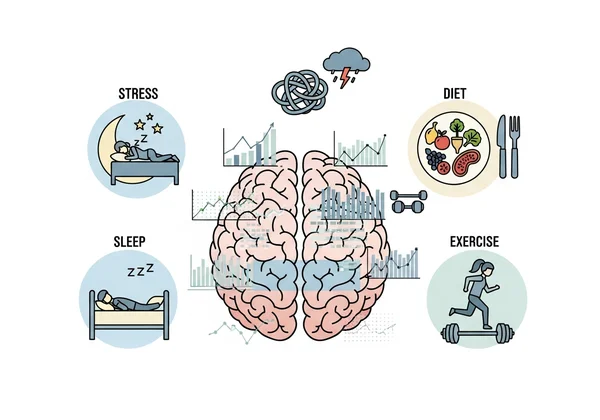
It's a common myth that significant cognitive changes only begin after age 60. While severe decline is rare in younger adults, the brain is constantly changing. Lifestyle factors like stress, poor sleep, diet, and lack of exercise can impact cognitive function at any age.
These effects can be subtle—a slight decrease in your ability to multitask, a minor dip in short-term memory, or finding it harder to focus during long meetings. A formal cognitive test can help quantify these feelings. It transforms vague concerns like "I feel foggy" into measurable data, providing a clear picture of your current cognitive state. This baseline is a powerful tool for early awareness and proactive health management.
Understanding Neuroplasticity: Your Brain's Lifelong Adaptability
One of the most exciting concepts in neuroscience is neuroplasticity. This refers to the brain's incredible ability to reorganize itself by forming new neural connections throughout life. It's the reason we can learn new skills, recover from brain injuries, and adapt to new environments. For younger adults, neuroplasticity is at its peak.
This means your brain is highly responsive to positive changes. Understanding your cognitive profile can highlight areas where you can focus your efforts. For example, if your assessment shows a slight weakness in attention, you can implement strategies like mindfulness or specific cognitive exercises to strengthen those neural pathways. Establishing a baseline gives you a starting point to track the positive impact of these efforts on your brain's performance.
What a Cognitive Test Actually Measures in Younger Adults
When you hear "cognitive test," you might only think of memory. However, a comprehensive assessment goes much deeper, evaluating a wide range of mental skills that are crucial for success in your personal and professional life. This is especially true for younger adults who rely on sharp cognitive abilities daily.
A proper cognitive test for adults provides a holistic view of your brain's performance, moving far beyond simple memory quizzes or brain games.
Beyond Memory: The 22 Cognitive Skills Being Assessed
Our minds perform a complex symphony of tasks every second. A robust cognitive assessment measures the individual instruments in that orchestra. At CognitiveTest.me, our assessment, developed by neuropsychologists and data scientists, evaluates 22 core cognitive skills.
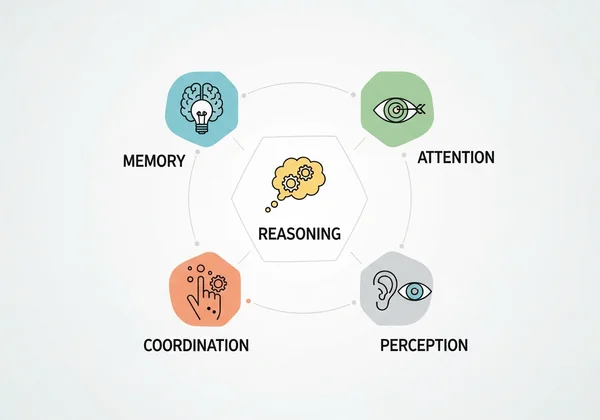
These skills are grouped into key domains, including:
- Memory: Short-term, working, and long-term memory.
- Attention: The ability to focus, sustain concentration, and divide your attention between tasks.
- Reasoning: Problem-solving, planning, and logical thinking.
- Coordination: Hand-eye coordination and reaction time.
- Perception: Your ability to recognize, interpret, and make sense of sensory information.
By measuring each of these skills, you get a detailed and nuanced profile of your cognitive strengths and weaknesses. This is far more insightful than a single score and provides a true understanding of how your brain functions.
Executive Function Tests: The Professional's Cognitive Dashboard
For ambitious younger adults, executive functions are particularly vital. These are the high-level mental processes that allow you to plan, focus, remember instructions, and juggle multiple tasks successfully. Think of them as the CEO of your brain, directing other cognitive functions to achieve goals.
Key executive functions include:
- Planning: The ability to think about the future and organize steps to achieve a goal.
- Working Memory: Holding and manipulating information in your mind for short periods.
- Inhibition: The skill of controlling your impulses and resisting distractions.
- Cognitive Flexibility: The capacity to switch between different tasks or ways of thinking.
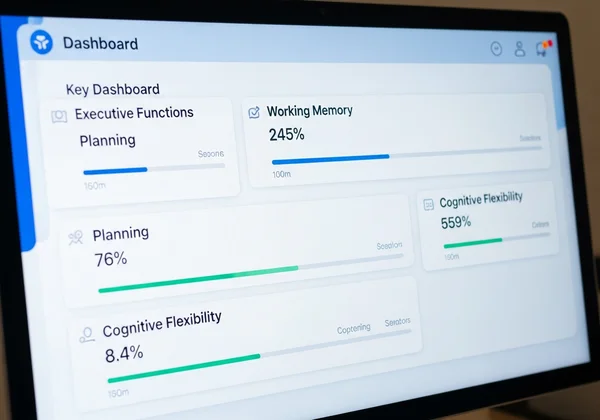
Difficulties in these areas can manifest as trouble meeting deadlines, disorganization, or feeling overwhelmed by complex projects. An executive function test component within a broader cognitive assessment gives you a clear dashboard of these critical skills, helping you identify areas to improve for peak professional performance.
How to Interpret Your Cognitive Test Results as a Young Adult
Receiving your cognitive test results can feel intimidating, but it's an empowering first step. The goal isn't to get a "perfect score" but to gain self-awareness. For a young adult, the results serve as a personalized roadmap for maintaining and enhancing brain health over the long term.
What's Normal: Understanding Age-Appropriate Cognitive Benchmarks
One of the most common questions is, "What is a good cognitive test score?" The answer depends on your age. A scientifically sound test compares your performance to a large dataset of individuals in your same age group. This process, known as "norming," provides context to your results.
For example, a score that is average for a 70-year-old might be a cause for concern in a 35-year-old. Our assessment uses extensive, age-normed data to ensure your report accurately reflects your performance relative to your peers. This helps you understand what is typical for your stage of life, allowing you to identify true strengths and potential areas for attention, not just compare yourself to a generic standard. Getting your brain health baseline is the first step in this process.
From Data to Action: Using Your Baseline to Optimize Brain Health
Your cognitive test results are not a final judgment; they are a starting point for action. Your personalized report will break down your performance across the 22 cognitive skills, highlighting your strengths and areas that could be improved. This is where the power of a baseline truly shines.
With this data, you can make informed lifestyle choices:
- Targeted Improvement: If your report indicates weaker attention skills, you might explore mindfulness meditation or techniques to reduce digital distractions.
- Leverage Strengths: If you show strong reasoning abilities, you can lean into that strength in your professional life to solve complex problems.
- Monitor Changes: This initial test becomes your baseline. By re-testing every 1-2 years, you can track your cognitive journey and see how lifestyle changes positively impact your brain health.
The report transforms abstract data into actionable steps, empowering you to take control of your cognitive future.
Your Brain Health Journey Begins Today
When you're constantly juggling work, family, and personal goals, your brain faces unprecedented demands. Creating a cognitive baseline isn't about finding problems—it's about taking control of your mental edge. By understanding your cognitive profile today, you can make informed decisions to protect and enhance your most valuable asset: your mind.
The earlier you create this baseline, the better equipped you'll be to notice subtle changes and take proactive steps throughout your life. A comprehensive cognitive assessment provides the scientific insights needed to understand your unique strengths and weaknesses. It's the first step toward a lifelong journey of cognitive wellness.
Ready to gain a deeper understanding of your own mind? Take the first step toward optimizing your cognitive performance with our scientifically validated assessment.
Frequently Asked Questions About Cognitive Testing for Younger Adults
Can younger adults benefit from cognitive testing if they feel "fine"?
Absolutely. Cognitive testing is not just for identifying problems; it is for establishing a baseline. Many cognitive changes happen subtly over time, and having a baseline allows you to track shifts that might otherwise go unnoticed. Think of it like a routine physical exam—it helps establish what’s normal and healthy for you.
How is a cognitive test for younger adults different from tests for seniors?
While the core cognitive skills assessed are the same, the interpretation differs based on age-appropriate benchmarks. A younger adult's results are compared to others in their age group. The focus is often on identifying subtle variations from expected performance and optimizing skills, rather than detecting significant decline. Our comprehensive test uses age-normed data to provide accurate interpretations for adults of all ages.
What if my cognitive test results show areas of concern?
It's important to view your test results as a snapshot of your cognitive function at a particular time, not as a definitive diagnosis. If your results suggest areas that warrant attention, the next step is to discuss them with a healthcare professional for a more comprehensive evaluation. Our test is designed as a powerful screening tool to help inform those important conversations.
How often should younger adults take cognitive tests?
For establishing a baseline, taking a comprehensive cognitive assessment once is the perfect start. For ongoing monitoring, many health professionals suggest retesting every one to two years. You might consider retesting more frequently if you are actively implementing lifestyle changes to improve cognitive health or if you have specific concerns about your cognitive function.