MCI vs. Normal Aging: Key Differences & When to Take a Cognitive Test
Have you ever walked into a room and completely forgotten why you went in? Or struggled to recall a familiar name that’s right on the tip of your tongue? These moments can be unsettling, making you wonder if they are simply a normal part of getting older or a sign of something more. Understanding the difference between normal aging and Mild Cognitive Impairment (MCI) is the first step toward gaining clarity and peace of mind. But how can I test my cognition? An accessible and reliable cognitive test can provide valuable insights into your brain health.
This guide will explore the key distinctions between these two conditions, helping you recognize the signs that matter and understand when it’s time to take action. Gaining knowledge is the most empowering tool you have. To get a baseline understanding of your cognitive abilities, you can start a test now.
Understanding Normal Cognitive Aging vs. Mild Cognitive Impairment (MCI)
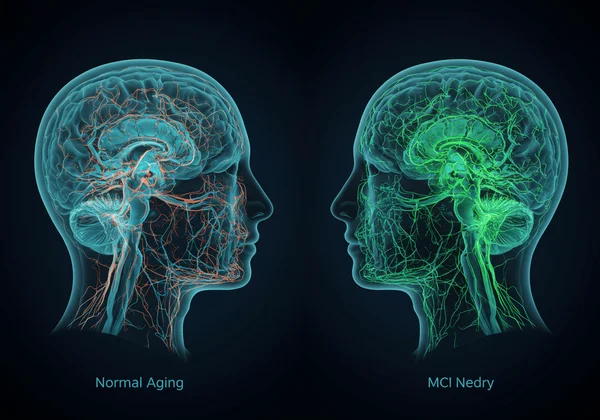
As we get older, our bodies change, and our brains are no exception. Some cognitive shifts are a natural and expected part of the aging process. However, Mild Cognitive Impairment (MCI) represents a more significant change that warrants attention. Distinguishing between the two is crucial for proactive brain health management.
What is Normal Memory Loss as We Age?
Forgetting things from time to time is a universal human experience. In the context of aging, this is often referred to as age-associated memory impairment. These lapses are typically minor and do not significantly disrupt your daily life, work, or relationships.
Examples of normal cognitive changes include:
- Occasionally forgetting where you left your keys or glasses.
- Sometimes struggling to find the right word in a conversation.
- Forgetting the name of an acquaintance you don’t see often.
- Walking into a room and forgetting your purpose momentarily.
The key aspect of these changes is their inconsistency and minimal impact. You might forget an appointment but remember it later. These "senior moments" can be frustrating, but they don't prevent you from managing your finances, following a recipe, or navigating familiar places. They are glitches in the system, not a system failure.
What Exactly is Mild Cognitive Impairment?
Mild Cognitive Impairment (MCI) is an intermediate stage between the expected cognitive decline of normal aging and the more serious decline of dementia. Individuals with MCI have noticeable problems with memory, language, thinking, or judgment that are greater than normal age-related changes. However, these changes are not yet severe enough to interfere significantly with daily life or independent function.
Think of MCI as a warning light. While not everyone with MCI goes on to develop Alzheimer's disease or other forms of dementia, it does increase the risk. Recognizing it early provides a critical window of opportunity to take proactive steps, such as lifestyle adjustments and monitoring, which can help manage symptoms and potentially delay further decline. Getting a comprehensive cognitive function test can provide a clear snapshot of where you stand.
Key Distinctions: When to Be Concerned About Memory Loss Signs
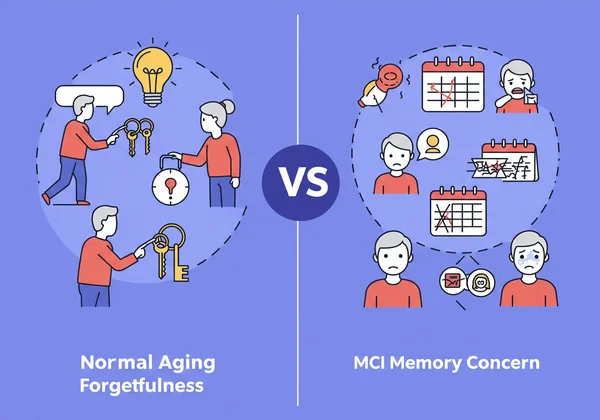
So, where is the line between a normal "oops" moment and a potential red flag? The primary difference lies in the frequency, severity, and impact on daily functioning.
Here’s a simple breakdown of the key distinctions:
- Normal Aging: You forget parts of an experience (e.g., what you had for lunch last Tuesday).
- MCI Concern: You forget entire experiences (e.g., forgetting a recent special family dinner altogether).
- Normal Aging: You might have to search for a word but can usually carry on a conversation.
- MCI Concern: You frequently lose your train of thought or have significant trouble finding words, making conversations difficult to follow.
- Normal Aging: Your decision-making and judgment are generally intact.
- MCI Concern: You start to show uncharacteristically poor judgment, such as making questionable financial decisions.
- Normal Aging: Daily tasks are manageable, though they may take a bit longer.
- MCI Concern: You begin to feel overwhelmed by complex tasks you once handled easily, like paying bills or planning an event.
If you or a loved one are experiencing memory loss signs that consistently fall into the "concern" category, it’s a signal that a closer look is warranted.
Recognizing Common MCI Symptoms and Their Impact
The symptoms of MCI can be subtle at first but become more persistent over time. While memory issues are the most well-known, MCI symptoms can affect various cognitive domains. Acknowledging these signs is the first step toward understanding what’s happening and seeking the right support.
Memory Difficulties Beyond Normal Forgetfulness
The memory loss associated with MCI is more pronounced than the occasional lapse. It involves forgetting important information that you would normally recall easily. This isn't about misplacing your phone; it's about forgetting recent, significant events or repeatedly asking the same questions after receiving the answer.
You might find yourself or a family member:
- Losing personal items like wallets or keys frequently.
- Forgetting important appointments, social events, or family milestones.
- Struggling to remember recent conversations or the plot of a TV show you just watched.
These memory difficulties can create anxiety and frustration, as you may be aware that your memory is slipping but feel unable to control it.
Other Cognitive Changes: Attention, Language, and Judgment
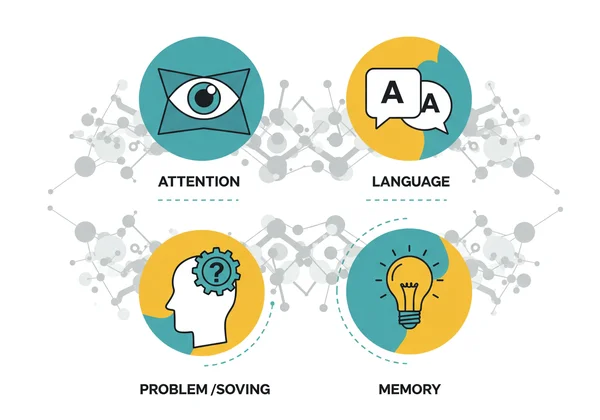
MCI isn't just about memory. It can also impact other cognitive skills. The brain is a complex network, and a decline in one area can affect others. This is why a thorough assessment should look beyond just memory recall.
Other changes to watch for include:
- Attention and Concentration: Difficulty focusing on a task, being easily distracted, or struggling to follow a multi-step direction.
- Language: An increased struggle to find the right words (anomia). You might substitute words, talk around a subject, or pause frequently while speaking.
- Executive Function and Judgment: Trouble with planning, problem-solving, or making sound decisions. This could manifest as difficulty managing a budget or making a poor choice that is out of character.
When these changes occur together, they can point towards a broader pattern of cognitive change that needs to be evaluated. A mild cognitive impairment test can help identify which specific cognitive domains are being affected.
How MCI Affects Daily Life: Subtle but Noticeable Changes
While MCI, by definition, doesn't severely impair independent living, its impact on daily life is often what prompts individuals or their families to seek help. The changes are subtle but create real-world friction. You might still be able to cook, drive, and dress yourself, but the processes may feel more challenging.
For instance, you might start relying more heavily on notes and reminders to manage your schedule. A complex project at work or home that you once navigated with ease might now feel overwhelming. You may also feel a growing sense of hesitation or anxiety in social situations because you're worried you won't be able to keep up with conversations. These are the small but significant signs that your cognitive health may need attention.
The Role of a Cognitive Test for Early Detection & Monitoring
If you're noticing these signs in yourself or a loved one, you might feel uncertain about what to do next. This is where a cognitive test becomes an invaluable tool. It moves you from a state of worry and guesswork to one of clarity and proactive management. It provides objective data to help you understand your cognitive state.
Why Early Assessment Matters for Brain Health
When it comes to brain health, early awareness is everything. An early assessment provides a crucial baseline—a snapshot of your cognitive function at a specific point in time. This baseline is essential for monitoring changes moving forward. If you wait until symptoms are more pronounced, it can be harder to track the progression accurately.
Furthermore, identifying potential issues early allows you to implement evidence-based lifestyle changes that can support cognitive health. Interventions related to diet, exercise, sleep, and social engagement have been shown to have a positive impact on the brain. Early detection empowers you to make these changes when they can be most effective.
How Our Platform Can Help Assess Your Cognitive State
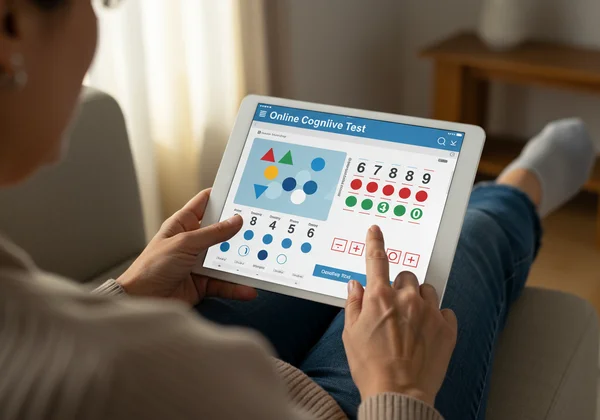
Navigating the world of cognitive testing can be confusing, but it doesn't have to be. Our platform offers a scientifically validated and comprehensive online cognitive test designed by neuropsychologists and data scientists. It provides an accessible and reliable way to get a detailed look at your cognitive profile from the comfort of your home.
Unlike simple brain games or short quizzes, our assessment evaluates 22 core cognitive skills, including memory, attention, reasoning, and coordination. The process takes about 30-40 minutes and involves a series of engaging tasks. Once complete, you receive an AI-enhanced report that breaks down your cognitive strengths and weaknesses in an easy-to-understand format. This allows you to assess your cognitive state with precision and clarity.
Monitoring Cognitive Changes Over Time with Repeat Testing
Your cognitive health is not static. Just as you monitor your blood pressure or cholesterol over time, it’s beneficial to monitor cognitive changes. Taking a cognitive assessment periodically—perhaps annually or as recommended by a healthcare professional—can help you and your doctor track your cognitive trajectory.
This long-term view is incredibly powerful. It can help determine if cognitive changes are stable, progressing, or even improving with lifestyle interventions. Regular monitoring provides objective data that can facilitate more productive conversations with your doctor and help you make informed decisions about your health. It puts you in the driver's seat of your cognitive journey.
Empowering Yourself with Knowledge: Take the Next Step in Cognitive Health
Distinguishing between normal aging and Mild Cognitive Impairment is the first crucial step in taking control of your cognitive health. While occasional forgetfulness is a normal part of life, persistent and impactful changes in memory, thinking, and judgment should not be ignored. Knowledge removes fear and replaces it with empowerment.
By understanding the signs and knowing that reliable tools are available, you can move forward with confidence. A comprehensive cognitive test provides the clarity needed to understand your cognitive profile, establish a baseline, and make informed decisions.
Ready to take the next step? Visit CognitiveTest.me to take our free, scientific cognitive assessment and begin your journey toward understanding and nurturing your brain health.
Disclaimer: This article is for informational purposes only. The test provided on our platform is a screening tool and is not a substitute for a professional medical diagnosis. Please consult with a qualified healthcare provider for any health concerns or before making any decisions related to your health.
Frequently Asked Questions About MCI and Cognitive Testing
Can I take a cognitive test online for free?
Yes, you can. Our platform offers a comprehensive, scientifically-designed cognitive assessment test for free. Unlike many simple online quizzes, our platform evaluates 22 different cognitive abilities to provide a detailed and reliable profile of your cognitive strengths and weaknesses, giving you valuable insights without any cost.
What if you fail a cognitive test?
Cognitive tests aren't about passing or failing. They are measurement tools designed to identify your unique cognitive pattern—areas where you excel and areas that might be a challenge. If your results indicate potential weaknesses, it's not a failure; it’s a valuable piece of information. It serves as a starting point for a conversation with your doctor to determine the next steps. You can discover your results to better understand your profile.
How difficult is a cognitive test?
A well-designed cognitive test should be challenging but not impossible. The tasks on our platform are created to engage and measure a wide range of abilities, from simple reaction time to complex problem-solving. The test adapts to provide an accurate assessment, so while some tasks may feel easy, others will require more focus. The entire assessment is designed to be completed in about 30-40 minutes.
How can I test my cognition?
Testing your cognition has never been more accessible. A great first step is to use a reliable online tool. Reliable online platforms provide a structured and comprehensive way to measure your cognitive skills from home. This gives you a data-driven overview of your brain health, which you can then share with a healthcare professional for further discussion and guidance.