Neurocognitive Exam: What It Tests, Examples, and How to Prepare
A neurocognitive exam is a structured way to look at how different thinking skills work together, including attention, memory, processing speed, language, reasoning, and executive function. People search for this topic when they are preparing for a neuropsych exam, comparing cognitive testing options, or trying to understand what a professional evaluation can and cannot tell them. If you want a lower-pressure starting point before a clinical appointment, a science-minded cognitive screening platform can help you reflect on cognitive strengths and challenges without treating the result as a medical conclusion.
What a Neurocognitive Exam Measures
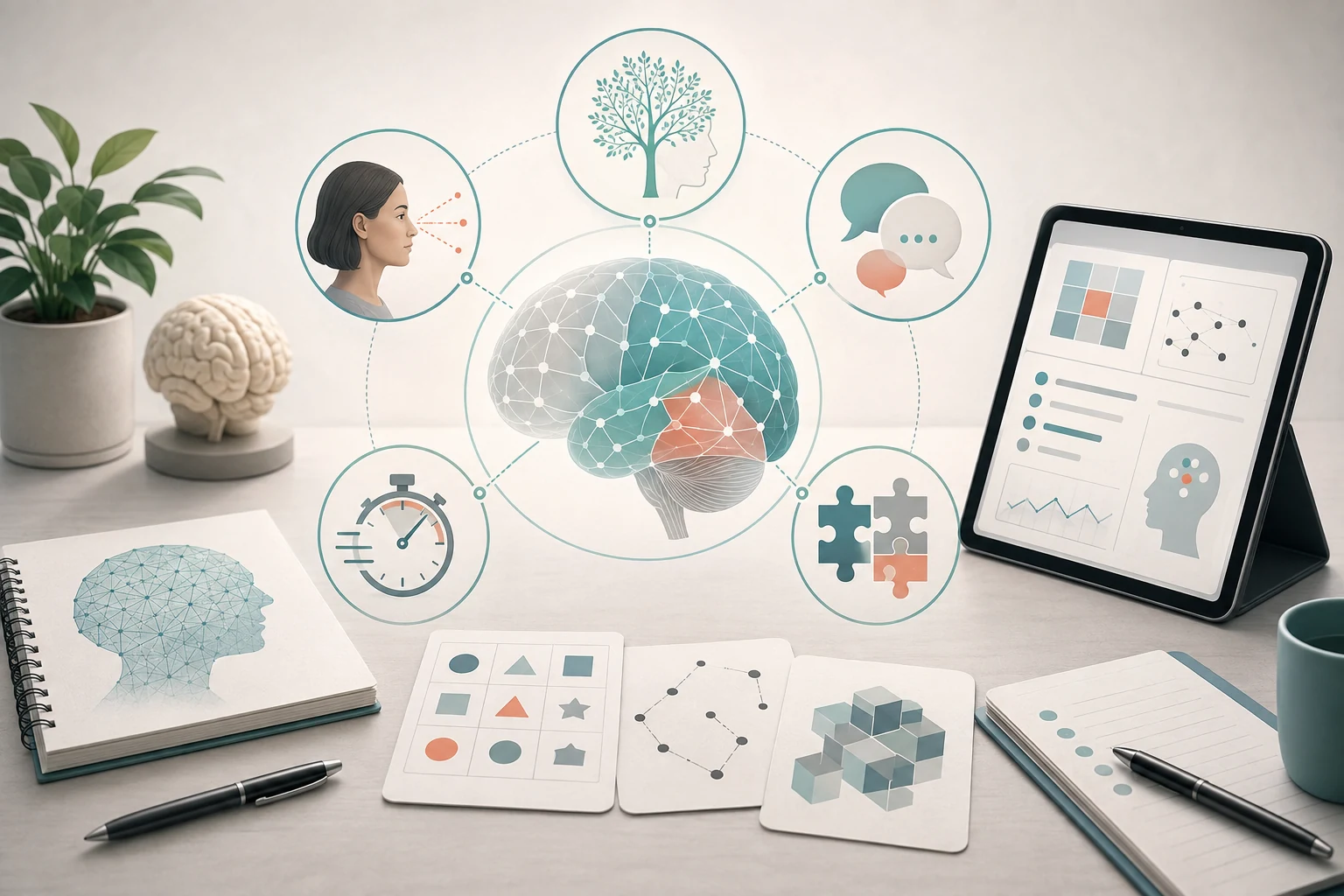
A neurocognitive exam is usually part of a broader neuropsychological evaluation. Instead of asking one broad question such as "is my memory okay?", it breaks cognition into smaller domains and examines patterns. A person might do well on vocabulary and general knowledge, for example, while finding timed visual scanning more difficult. Another person may remember stories well but struggle with working memory when several pieces of information must be held in mind at once.
Common domains include attention, learning and memory, language, visual-spatial processing, problem solving, mental flexibility, motor speed, mood, and everyday function. The exact mix depends on the referral question. A dementia-focused evaluation may emphasize memory, orientation, daily function, and change over time. Neurocognitive testing for ADHD may focus more on attention, working memory, inhibition, processing speed, and executive skills. Autism-related evaluations often look beyond scores alone, combining cognitive results with developmental history, communication patterns, adaptive function, and behavior observations.
This is why the phrase neurocognitive exam can overlap with neuropsychological testing, neuropsychological assessment, neuropsych eval, neuro test, cognitive evaluation, or neurological testing. The words vary by clinic and context, but the central idea is similar: standardized tasks are interpreted alongside history, symptoms, functioning, and the reason for referral.
Neurocognitive Test Examples You Might See
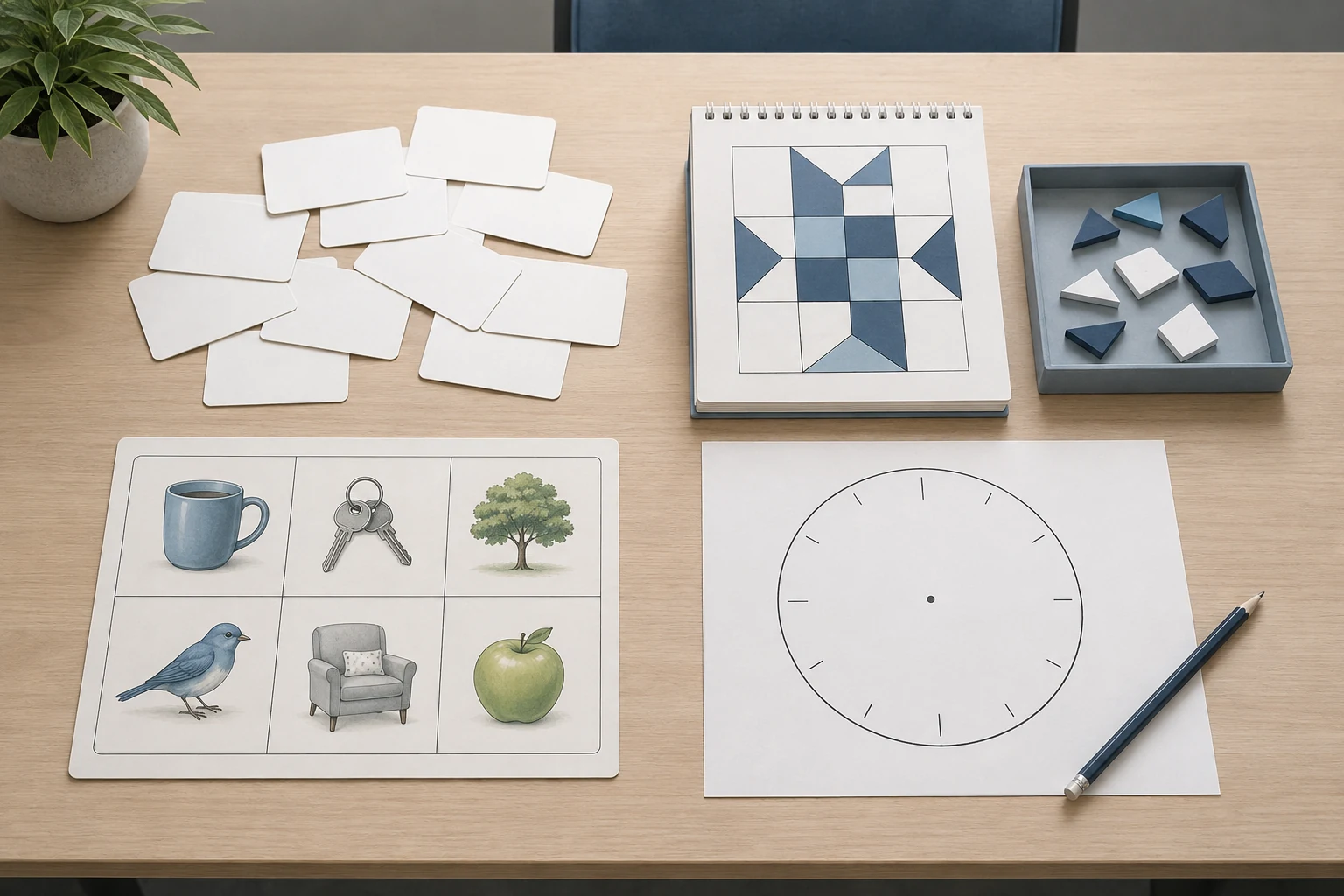
Neurocognitive test examples are not usually trivia questions with a fixed answer key. They are tasks designed to sample different mental skills under consistent conditions. You might be asked to remember a list of words, copy a complex figure, match symbols quickly, repeat numbers forward and backward, explain similarities between concepts, name objects, follow multi-step instructions, solve puzzles, or shift between two sorting rules.
Brief cognitive screens may include familiar tools such as the Mini-Cog, MoCA, MMSE, SLUMS, or informant questionnaires, depending on the setting. A full evaluation is more detailed than a five-minute screen. It may include several tests, interviews, rating scales, records review, and interpretation by a trained professional.
People sometimes search for neuropsychological test questions and answers PDF because they want to feel prepared. That instinct is understandable, but memorizing sample answers is not useful and can make the results less meaningful. A better goal is to understand the kinds of tasks involved, bring accurate background information, and give steady effort. For self-reflection between appointments, an online cognitive test for self-reflection can provide a broad cognitive snapshot, while a clinician can interpret concerns in a full health context.
Online Neurocognitive Tests vs a Full Neuropsychological Evaluation
A neuro cognitive test online can be helpful when the goal is education, baseline awareness, or repeated tracking. Online cognitive assessments may be easier to access, faster to complete, and useful for noticing which domains feel relatively strong or challenging. They can also help you organize questions before speaking with a professional.
A full neuropsychological evaluation is different. It is tailored to a referral question, administered or supervised by qualified professionals, and interpreted with medical history, education, mood, sleep, medications, language background, sensory factors, and daily functioning in mind. It may include performance validity checks, which help the examiner understand whether the score pattern reflects a person's best available effort under the circumstances.
The distinction matters because online neuropsychological testing is not one single thing. Some remote tools are research-grade or clinician-guided, while others are simple wellness quizzes. If you use an online tool, look for clear limits, standardized tasks, privacy information, and language that frames results as insight rather than certainty. A trustworthy tool should help you ask better questions, not replace professional judgment.
How Long a Full Neuropsych Eval Can Take
A full neuropsych eval often takes several hours, and some evaluations are split across more than one visit. The time depends on the referral question, the person's stamina, the number of domains being assessed, and whether interviews or questionnaires are included. Children, older adults, people recovering from brain injury, and people with complex medical histories may need a different pace.
The process commonly includes an intake interview, testing time, scoring and interpretation, and a feedback appointment or written report. During testing, breaks are normal. Feeling mentally tired afterward is also common because the tasks ask for sustained attention.
Preparation is practical rather than academic:
- Sleep as well as you reasonably can the night before.
- Eat beforehand unless your clinician gives different instructions.
- Bring glasses, hearing aids, medication lists, school records, prior evaluations, or relevant medical notes.
- Mention pain, fatigue, sleep loss, anxiety, medications, or language factors that could affect performance.
- Ask how long the visit may last and whether breaks are available.
Can You Fail a Neuropsychological Test?
The search phrase "how to fail a neuropsychological test" usually comes from anxiety, legal stress, school pressure, or fear of being misunderstood. In ordinary clinical language, a neuropsychological test is not pass/fail. It is meant to show a pattern of strengths, weaknesses, and real-world needs. A low score in one area does not define the whole person, and a high score in another area does not erase genuine difficulties.
What can make results less useful is poor sleep, misunderstanding instructions, not wearing needed glasses or hearing aids, heavy alcohol or recreational drug use before testing, or trying to game the tasks. Some evaluations include validity measures to check whether the pattern of responses is interpretable. The most helpful approach is simple: be honest, ask for clarification when instructions are unclear, and give consistent effort.

Dementia, ADHD, Autism, and Other Common Referral Questions
Neurocognitive testing for dementia is often used when there are concerns about memory, reasoning, daily independence, or change from a person's previous baseline. A brief office screen can be a starting point, but a longer assessment can provide a more detailed profile, especially when symptoms are subtle or the picture is mixed with depression, sleep problems, medications, pain, or sensory changes.
For ADHD, testing may examine attention, working memory, processing speed, planning, and impulse control. Test results alone do not settle every ADHD question because real-life history matters. A person can show attention problems for many reasons, including sleep deprivation, anxiety, mood concerns, concussion history, or overwhelming stress.
Does neuropsychological testing test for autism? It can be part of an autism evaluation, especially when the goal is to understand learning style, adaptive function, executive skills, language, or co-occurring attention and learning concerns. Autism assessment usually needs developmental history and behavior-focused tools in addition to cognitive tasks.
Other referral questions include traumatic brain injury, stroke, epilepsy, multiple sclerosis, learning differences, workplace function, school accommodations, medication effects, or changes after illness. The shared thread is not a label. It is the need to understand how cognition affects daily life.
How to Use Neurocognitive Exam Results Wisely
Results are most useful when you read them as a map, not a verdict. Look for the domains assessed, the comparison group used for scoring, the pattern across tasks, the examiner's notes about effort and context, and the recommendations. A single number is rarely the whole story.
Useful questions to ask after a neurocognitive exam include:
- Which cognitive areas were relative strengths?
- Which areas were more difficult, and how might they affect daily routines?
- Were any results affected by sleep, mood, pain, language, or sensory factors?
- What follow-up steps are recommended?
- Should results be shared with a physician, school team, therapist, employer accommodation office, or family caregiver?
If you are using online cognitive testing, focus on trends and reflection rather than self-labeling. Repeating a standardized online assessment over time may help you notice changes worth discussing, especially if the same environment and device are used each time. Still, any serious concern about memory, attention, behavior, independence, safety, or school/work function deserves professional review.
A Practical Next Step Before or After an Exam
If you are preparing for a neurocognitive exam, the best first step is to clarify the question you want answered. Are you worried about memory change, attention, recovery after injury, school performance, work demands, or a family member's daily functioning? That question shapes which records to bring, which examples to write down, and which results will matter most.
You can also build a personal cognitive baseline outside the clinic. A careful, structured tool can help you reflect on attention, memory, perception, and executive skills before a longer evaluation or after receiving recommendations. CognitiveTest.me is designed for insight and education, not clinical certainty, and its structured cognitive profile can give you language for a calmer conversation with a qualified professional.
FAQ
What is the 12 question dementia test?
People use that phrase loosely, so it is worth asking which tool they mean. Dementia screening may involve brief tools such as the Mini-Cog, MoCA, MMSE, SLUMS, or caregiver questionnaires. Some tools have only a few items, while others include multiple tasks. A brief screen can flag concerns, but a full evaluation looks more deeply at memory, attention, language, daily function, history, and context.
What are the five cognitive tests?
There is no universal set of exactly five cognitive tests. In many settings, people are referring to common screening tools such as Mini-Cog, MoCA, MMSE, SLUMS, and AD8, or to five domains such as memory, attention, language, executive function, and visual-spatial skills. The right tool depends on the person, setting, and referral question.
How long does a full neuropsych eval take?
Many full evaluations take several hours, and some are split across multiple appointments. Time varies by age, stamina, referral question, and the number of interviews, questionnaires, and test domains included. Ask the clinic how long to reserve and whether you can take breaks.
Can you give me an example of a neuropsychological test?
One example is a word-list learning task. The examiner reads a list of words, asks you to recall as many as possible, repeats the process, and later asks for delayed recall or recognition. Other examples include drawing a figure from memory, sorting cards by changing rules, repeating digit sequences, naming objects, or completing timed symbol-matching tasks.
Is a neurocognitive exam the same as a neurological evaluation?
No. A neurological evaluation is usually a medical exam focused on the nervous system, reflexes, movement, sensation, imaging, labs, and related findings. A neurocognitive exam focuses on thinking skills and behavior through structured tasks and interviews. The two can complement each other.
Is neurocognitive testing for ADHD useful?
It can be useful when attention, working memory, processing speed, or executive skills need clearer measurement. It is strongest when combined with history, rating scales, school or work information, sleep and mood context, and professional interpretation. Scores alone should not be treated as the whole answer.
Can an online neuropsychological test replace an in-person evaluation?
Usually no. Online tools can support education, screening, and tracking, but a full evaluation includes professional interpretation and broader context. Online results are best used as organized information to discuss with a clinician, not as a final medical conclusion.