Understanding Cognitive Test Scores: Your Results & Next Steps
Getting your cognitive test results often sparks curiosity, along with a touch of apprehension. You've completed the assessment, and now you have a report in front of you. But what is a good cognitive test score? This guide will help you understand what your results mean, why they are a powerful tool for self-awareness, and what actionable steps you can take on your brain health journey. We'll break down the numbers and insights in a way that is clear, empowering, and focused on your well-being.
Decoding Your Cognitive Test Scores: What Do They Represent?
Your cognitive test report is more than just a number; it's a snapshot of your brain's performance at a specific moment in time. Think of it not as a final grade, but as a detailed map that highlights different aspects of your mental landscape. Understanding this map is the first step toward navigating your cognitive health with confidence.
What is a "Good" Cognitive Test Score?
This is often the first question on everyone's mind. The simple answer is that there is no universal "good" or "bad" score. Cognitive performance exists on a spectrum. Instead of a pass/fail model, these scores are designed to provide a baseline—a starting point for understanding your unique cognitive profile. The most valuable score is your own, as it allows you to track changes over time and gain personal insight. A score's true power lies in what it reveals about your personal strengths and areas where you might focus your attention.
Understanding Norm-Referenced Scores and Percentiles
To give your scores context, platforms like ours use norm-referenced scoring. This means your performance is compared to a large, anonymous group of people with similar demographic backgrounds (like age and education level). This comparison is often expressed as a percentile. For example, a score in the 70th percentile means you performed as well as or better than 70% of the people in the reference group. This method provides a scientifically grounded perspective on your cognitive function test results, moving beyond subjective feelings to data-driven insights.
The 22 Cognitive Skills Assessed
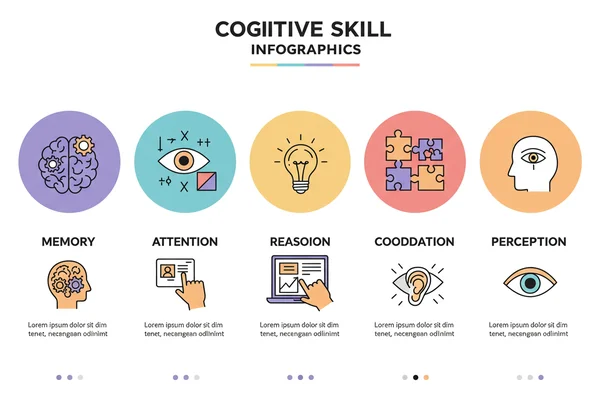
A key advantage of a comprehensive cognitive assessment is its detailed view. Instead of one single score, our comprehensive assessment evaluates 22 distinct cognitive skills. These skills fall into broader categories that are crucial for daily life, such as:
- Memory: Including working memory, short-term visual memory, and long-term memory.
- Attention: Such as focused attention, divided attention, and processing speed.
- Reasoning: Covering planning, logic, and problem-solving abilities.
- Coordination: Involving skills like hand-eye coordination and response time.
- Perception: Including visual, auditory, and spatial perception.
By looking at each of these areas, our comprehensive assessment provides a holistic picture, allowing you to see exactly where you excel and which skills might benefit from practice or lifestyle adjustments.
How to Interpret Your Cognitive Test Results Report
Your personalized report brings the data to life. It’s designed to be intuitive and useful, translating complex metrics into meaningful guidance. Taking a few moments to understand its components will help you get the most value from your cognitive testing experience.
Unpacking Your Personalized AI-Enhanced Insights
This is where our platform truly stands out. The platform’s AI takes your raw scores and enriches them with the anonymous background information you provide. This AI-enhanced insight helps contextualize your performance, offering a more nuanced and accurate interpretation. The report doesn't just tell you what your scores are; it helps explain why they might be that way and what they mean for you specifically, providing a level of personalization that generic tests lack.
Identifying Your Cognitive Strengths and Areas for Growth
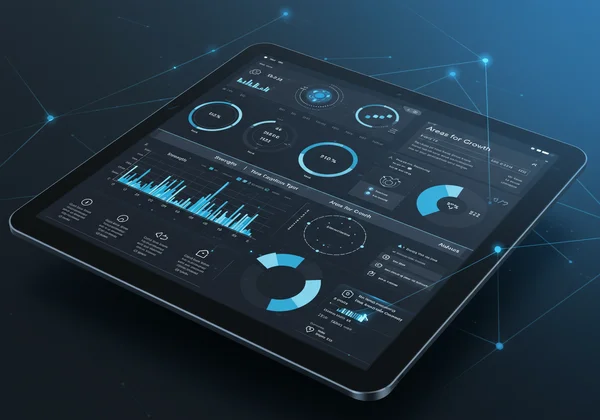
Your report is structured to be empowering. It will clearly highlight your cognitive strengths—the skills where you naturally excel. Recognizing these strengths is just as important as identifying areas for growth. These are the skills you can lean on in your daily life. The report will also point to areas where your performance was not as strong. Approach this information not as a weakness, but as an opportunity for targeted improvement and a way to support your long-term brain health. This balanced view is a core part of any good cognitive ability test.
Recognizing the Non-Diagnostic Nature of Online Assessments
It is critically important to understand the role of an online cognitive test. This assessment is a powerful screening and monitoring tool, not a diagnostic one. It can provide valuable clues about your cognitive health and help you track changes over time. However, it cannot diagnose any medical condition, such as mild cognitive impairment or dementia. Your results are a starting point for awareness and conversation, not a final medical conclusion. Think of it as a blood pressure cuff for your brain—it gives you a useful reading, but a doctor is needed for a diagnosis.
What If Your Cognitive Test Results Are Lower Than Expected?
Seeing a score that is lower than you hoped for can be disheartening, but it is not a cause for alarm. Many factors can influence your performance on any given day. The key is to approach the results with curiosity rather than anxiety and consider them as one piece of a much larger puzzle.
Common Reasons for Score Fluctuations and Variability
Your brain is not a machine that performs identically every day. Many temporary factors can affect your cognitive performance. These include:
- Fatigue or Poor Sleep: A restless night can significantly impact attention and memory.
- Stress and Anxiety: High-stress levels can temporarily hinder executive functions like planning and reasoning.
- Mood: Feeling down or distracted can affect your motivation and focus during the test.
- Environment: Distractions, noise, or interruptions during the assessment can lower scores.
- Physical Health: Feeling unwell, even with a minor cold, can divert your body's resources.
If your scores are surprising, consider retaking the assessment on a different day when you feel well-rested and focused to see if the results differ. You can always start monitoring today.
When to Consider Professional Consultation for Cognitive Concerns
If you have persistent concerns about your cognitive health, or if your test results confirm a pattern of difficulties you've noticed in daily life, it may be time to speak with a healthcare professional. Your personalized cognitive report can be an excellent, objective tool to bring to your appointment. It gives your doctor concrete data to review and can help guide the conversation about whether further evaluation is needed.
Proactive Strategies for Supporting and Enhancing Brain Health
Regardless of your scores, you can always take proactive steps to support your cognitive vitality. Research consistently shows that lifestyle choices have a profound impact on brain health. Consider incorporating some of these evidence-based strategies into your routine:
-
Regular Physical Exercise: Promotes blood flow to the brain and supports the growth of new neurons.
-
A Balanced Diet: Nutrients found in a Mediterranean-style diet are linked to better cognitive outcomes.
-
Quality Sleep: Essential for memory consolidation and clearing toxins from the brain.
-
Mental Stimulation: Engage in novel and challenging activities like learning a new skill, reading, or puzzles.
-
Social Engagement: Maintaining strong social connections is a powerful protective factor for cognitive function.

Empowering Your Cognitive Journey: Understanding & Action
Your cognitive test scores are not an endpoint; they are a starting line. They provide you with the knowledge and insight to become an active participant in your own brain health. By understanding what your results mean and recognizing their context, you can move from uncertainty to empowerment. Use this information to celebrate your strengths, identify opportunities for growth, and make informed lifestyle choices.
Ready to gain a deeper understanding of your own cognitive profile? Take the cognitive test today and begin your journey toward greater self-awareness and lasting brain health.
Frequently Asked Questions About Cognitive Test Results
Is there a passing or failing score for cognitive tests? No, reputable cognitive assessments like this one do not use a pass/fail system. Scores are meant to place your performance on a spectrum compared to others of a similar age and background, providing a personal baseline for your own cognitive skills.
How difficult is an online cognitive test like ours? The test is designed to be challenging but accessible. It includes a series of tasks that vary in difficulty to accurately measure the full range of your abilities across 22 different skills. The goal is to get an accurate measurement, not to be impossibly hard.
Can I take a cognitive test online for free to get an initial assessment? Yes, this platform offers a scientifically validated and comprehensive free cognitive test. It is an excellent way to get a detailed initial assessment of your cognitive profile without any cost, providing a valuable first step in understanding your brain health.
How does our scientifically validated assessment compare to casual brain games? While brain games can be a fun way to stay mentally active, they are not standardized or validated assessments. This assessment is built on established neuropsychological principles, similar to assessments used by clinicians, to provide a reliable and comprehensive measurement of your cognitive abilities.
What are the 10 warning signs of cognitive decline I should watch for? According to the Alzheimer's Association, key signs include memory loss that disrupts daily life, challenges in planning or problem-solving, difficulty completing familiar tasks, confusion with time or place, and trouble understanding visual images and spatial relationships. Other signs are new problems with words, misplacing things, decreased judgment, withdrawal from social activities, and changes in mood. An online assessment can help monitor some of these areas.