التقييم السلوكي والمعرفي: أمثلة وأدوات وأسئلة للبالغين
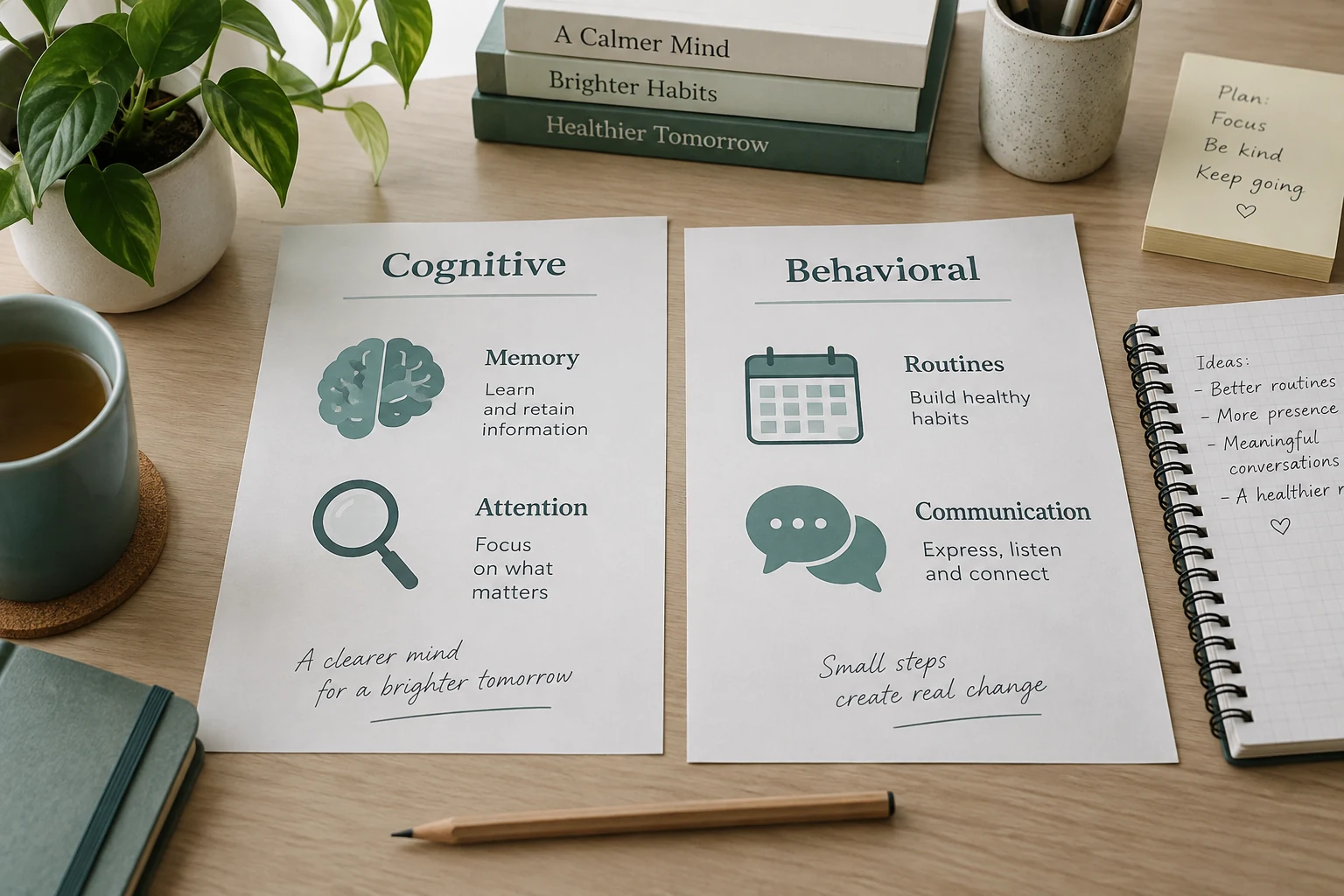
يجمع التقييم السلوكي والمعرفي بين طريقتين مترابطتين لفهم كيفية عمل الشخص.
ينظر الجانب المعرفي إلى
الانتباه والذاكرة والاستدلال وسرعة المعالجة واللغة وحل المشكلات. وينظر
الجانب السلوكي إلى الاستجابة
للمهام والمشاعر والتواصل والروتين والتكيف.
For adults, the two views are strongest together: a score can show that a
task was hard, while behavior
explains what happened in context. CognitiveTest.me offers ملف معرفي منظم for
educational insight rather than pressure.
ما الذي يقيسه التقييم السلوكي والمعرفي
Cognitive assessment asks which mental skills are used and how efficiently.
Depending on the setting, it
may cover memory, attention, reasoning, executive function, processing
speed, orientation, learning,
language, or decisions.
Behavioral assessment asks what patterns are visible across situations.
Observation, rating scales,
interviews, self-monitoring logs, caregiver reports, workplace feedback,
and questionnaires may all be
used.
Together they provide a practical map of strengths, challenges, context,
and next steps.
التقييم المعرفي مقابل السلوكي بلغة بسيطة
Cognitive assessment focuses on ability; behavioral assessment focuses on
action and response.
In healthcare, a screen is considered alongside history, examination,
medication, mood, sleep, education,
and daily functioning.
At work, cognitive tools may estimate learning and reasoning, while
behavioral tools explore
communication, patience, collaboration, and style.
For self-reflection, the purpose is to understand the current profile and
decide whether follow-up is
needed.
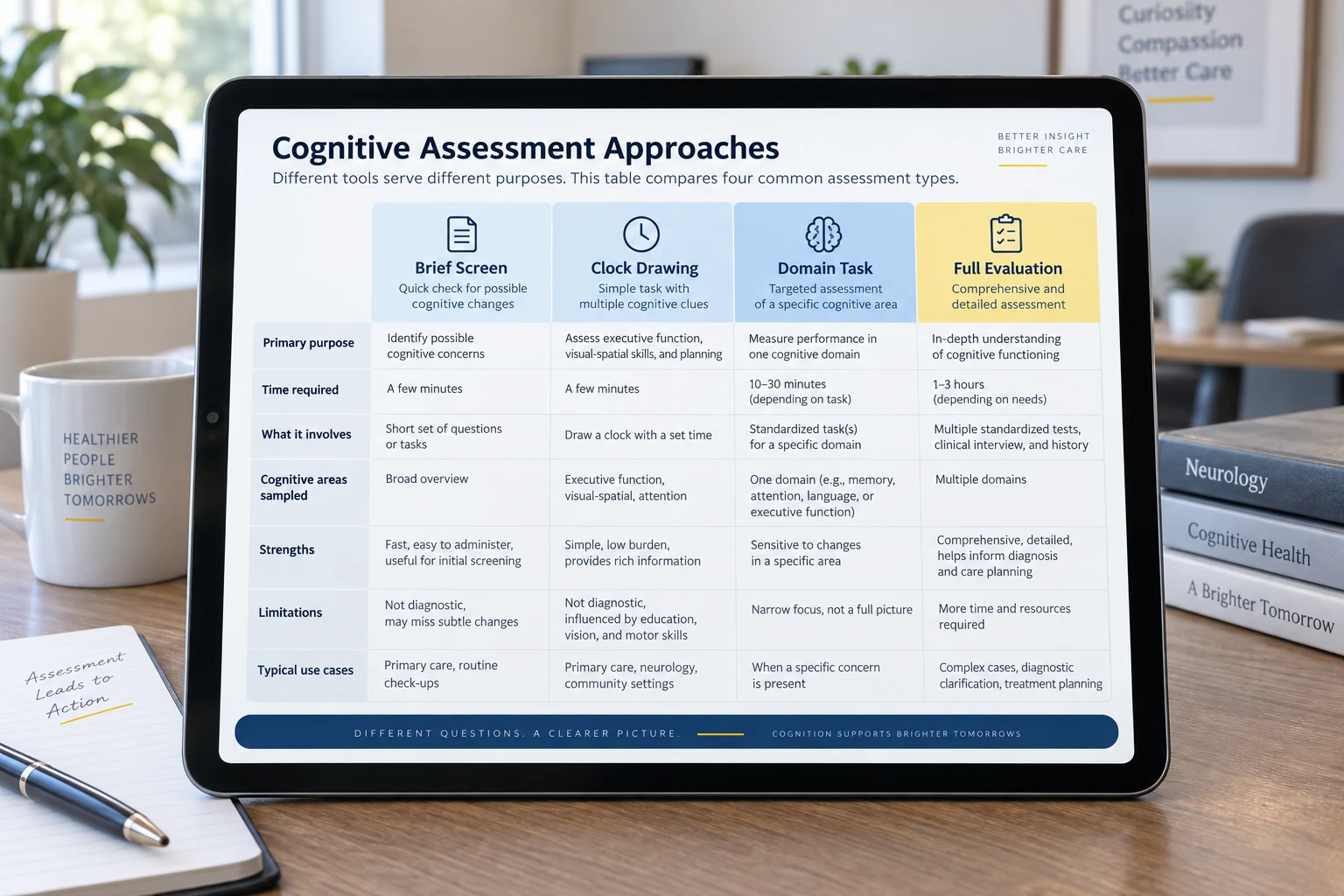
أربع أدوات شائعة للتقييم المعرفي
Common categories include brief screens, clock drawing, domain-specific
tasks, and full
neuropsychological evaluation.
1. Brief cognitive screens
Brief screens sample orientation, recall, attention, language, drawing, or
simple reasoning. MoCA, MMSE,
Mini-Cog, and SLUMS are common examples.
2. Clock drawing and visual tasks
Clock drawing combines instruction understanding, planning, visual
organization, number placement, and
motor output.
3. Domain-specific cognitive tasks
Focused tasks may test memory, attention, language, or executive function
more directly.
4. Full neuropsychological evaluation
A full evaluation is more detailed, standardized, and usually administered
by trained professionals when
the question is complex.
أمثلة على التقييم السلوكي والمعرفي
If an adult loses track in meetings, the cognitive view may review
attention, working memory, speed, and
verbal understanding; the behavioral view may review sleep, meeting length,
notes, anxiety, multitasking,
interruptions, and written agendas.
If a parent repeats the same question, memory, orientation, language,
routines, hearing, and reminders
may all matter.
If a candidate completes a timed reasoning task, the result may reflect
reasoning under pressure as well
as strategy, uncertainty, persistence, accommodations, and instruction
clarity.
Useful interpretation avoids one quick explanation and asks what the result
means in context.
ما الأسئلة التي تطرح في اختبار التقييم المعرفي؟
There is no universal list of 30 questions for every adult or purpose.
Formal tools may also have
protected scoring rules. Common tasks include:
- تذكّر ثلاث إلى خمس كلمات بعد تأخير قصير
- تكرار الأرقام إلى الأمام أو الخلف
- اتباع تعليمات شفهية متعددة الخطوات
- تسمية أشياء أو شرح أوجه الشبه
- رسم ساعة أو نسخ شكل أو إكمال نمط
- حل حساب بسيط أو عناصر تسلسل
- تسمية التاريخ أو المكان أو الوضع الحالي
- شرح الاستجابة لموقف عملي
The point is not to beat the assessment. A representative response is more
useful than a rehearsed one.
كيف تقرأ النتائج دون مبالغة
A low score, confusing pattern, or hard task does not automatically explain
the cause. Fatigue, anxiety,
pain, medication, sensory issues, unfamiliar technology, language, sleep,
and stress can affect
performance.
A strong score also does not mean daily-life concerns should be dismissed.
Useful interpretation asks:
- ما الذي تم قياسه
- ما الذي لم يتم قياسه
- ما الظروف التي ربما أثرت في الأداء
- ما الخطوة التالية المتناسبة
Many adults start with a baseline, track change, adjust habits, or bring
notes to a healthcare
appointment. CognitiveTest.me’s online cognitive assessment presents results
in a structured format.
التقييم السلوكي والمعرفي للبالغين: قائمة عملية
Clarify the purpose before relying on results.
- تذكّر ثلاث إلى خمس كلمات بعد تأخير قصير
- تكرار الأرقام إلى الأمام أو الخلف
- اتباع تعليمات شفهية متعددة الخطوات
- تسمية أشياء أو شرح أوجه الشبه
- رسم ساعة أو نسخ شكل أو إكمال نمط
- حل حساب بسيط أو عناصر تسلسل
- تسمية التاريخ أو المكان أو الوضع الحالي
A cognitive assessment questionnaire PDF can organize observations and
questions, but it should not
replace thoughtful review of cognitive skills, behavior patterns, health
context, and daily function.
متى تساعد أداة معرفية عبر الإنترنت منخفضة الضغط
An online tool helps most when used as a structured starting point. It can
reveal patterns, describe
strengths and challenges, and make conversations more concrete.
Online results cannot account for every medical, emotional, cultural,
language, sensory, or environmental
factor.
To begin calmly, explore an educational cognitive testing platform focused on
practical insight rather than alarm.

FAQ
How do I pass a cognitive assessment test?
The goal in health or self-reflection is a representative picture, not
school-style passing. Rest, use
needed aids, read instructions, and answer honestly.
Why would a neurologist order a cognitive test?
A neurologist may use testing for concerns about memory, attention,
language, thinking speed, problem
solving, or daily functioning.
What does it mean when you fail a cognitive test?
A below-expected result means the task was harder under those conditions.
It does not explain the reason
by itself.
What kind of questions are asked on a cognitive assessment test?
Common tasks involve recall, attention, arithmetic, orientation, naming,
instructions, drawing, patterns,
and practical judgment.
Are behavioral and cognitive assessments the same thing?
No. One focuses on mental skills; the other focuses on observable patterns.
Together they are often more
useful.
Is a free cognitive test with answers useful?
It can show question styles, but memorized answers reduce usefulness.
Honest fresh responses are better
for insight.
Can adults use behavioral and cognitive assessment for self-reflection?
Yes, with realistic expectations. Professional guidance is better when
concerns affect independence,
work, safety, or relationships.