行動評価と認知評価:成人向けの例、ツール、質問
行動評価と認知評価は、人がどのように機能しているかを理解する二つの関連した見方です。認知面は注意、記憶、推論、処理速度、言語、問題解決を見ます。行動面は課題への反応、感情、コミュニケーション、日課、環境への適応を見ます。
For adults, the two views are strongest together: a score can show that a
task was hard, while behavior
explains what happened in context. CognitiveTest.me offers 構造化された認知プロフィール for
educational insight rather than pressure.
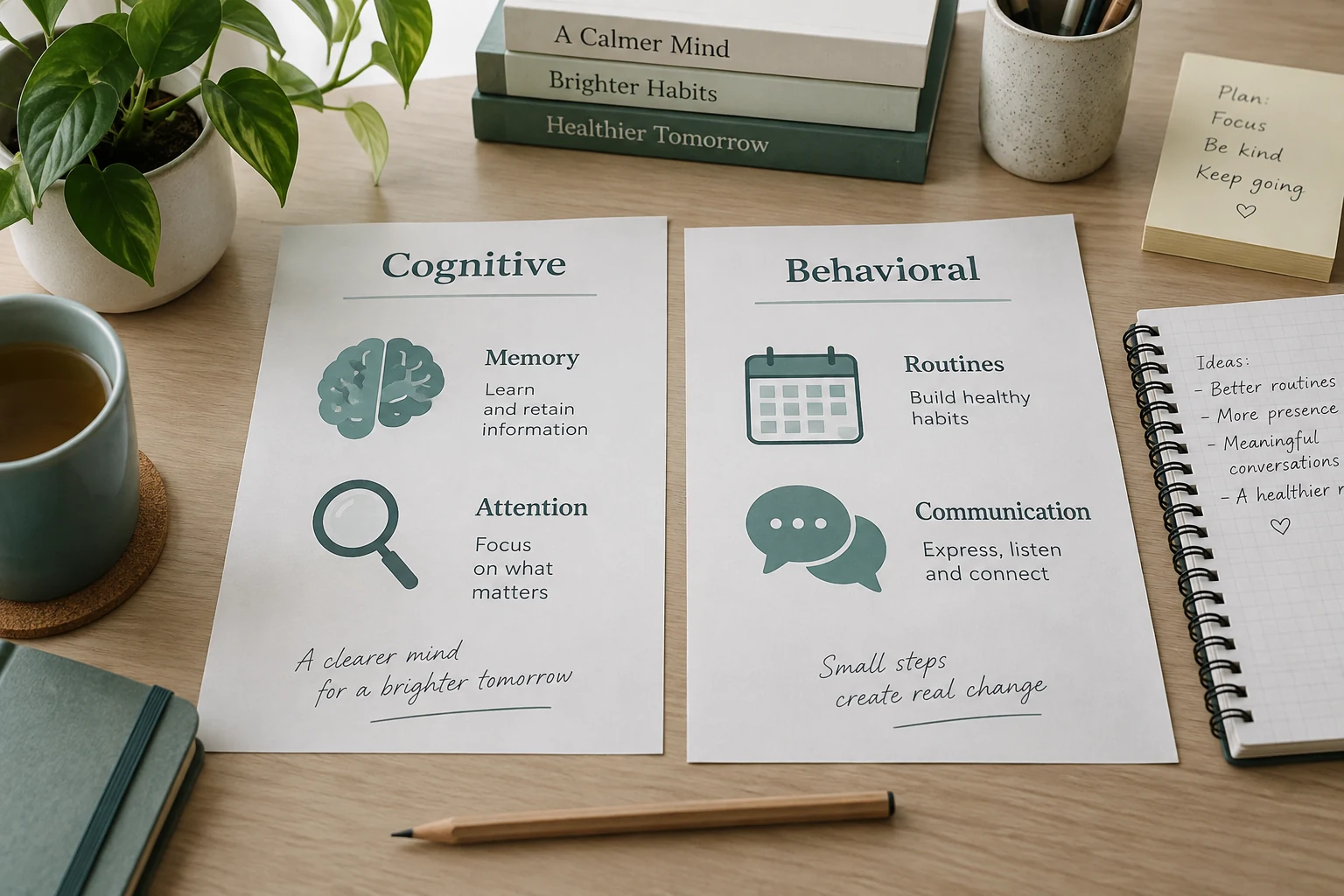
行動評価と認知評価が測るもの
Cognitive assessment asks which mental skills are used and how efficiently.
Depending on the setting, it
may cover memory, attention, reasoning, executive function, processing
speed, orientation, learning,
language, or decisions.
Behavioral assessment asks what patterns are visible across situations.
Observation, rating scales,
interviews, self-monitoring logs, caregiver reports, workplace feedback,
and questionnaires may all be
used.
Together they provide a practical map of strengths, challenges, context,
and next steps.
認知評価と行動評価をやさしく説明
Cognitive assessment focuses on ability; behavioral assessment focuses on
action and response.
In healthcare, a screen is considered alongside history, examination,
medication, mood, sleep, education,
and daily functioning.
At work, cognitive tools may estimate learning and reasoning, while
behavioral tools explore
communication, patience, collaboration, and style.
For self-reflection, the purpose is to understand the current profile and
decide whether follow-up is
needed.
よく使われる四つの認知評価ツール
Common categories include brief screens, clock drawing, domain-specific
tasks, and full
neuropsychological evaluation.
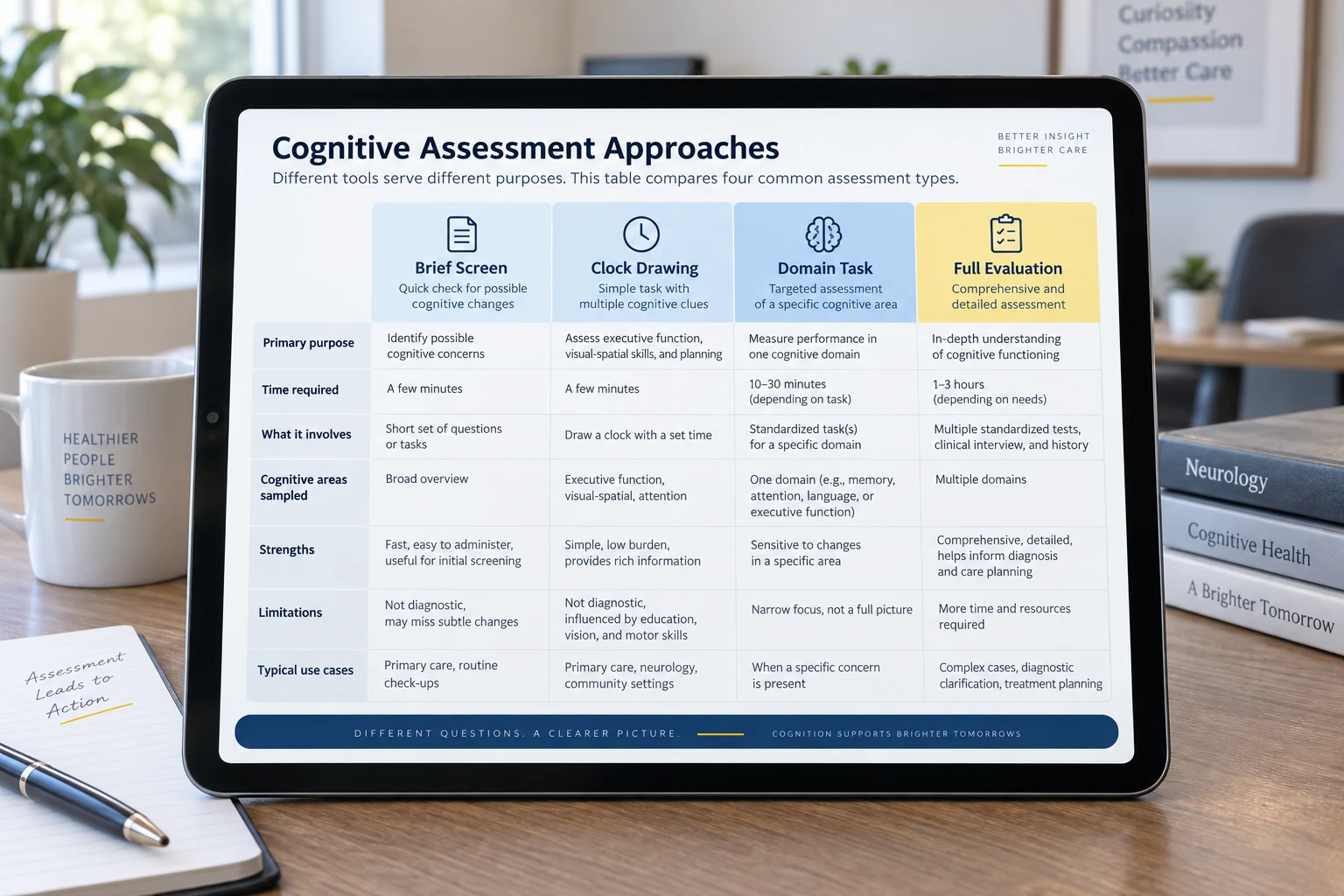
1. Brief cognitive screens
Brief screens sample orientation, recall, attention, language, drawing, or
simple reasoning. MoCA, MMSE,
Mini-Cog, and SLUMS are common examples.
2. Clock drawing and visual tasks
Clock drawing combines instruction understanding, planning, visual
organization, number placement, and
motor output.
3. Domain-specific cognitive tasks
Focused tasks may test memory, attention, language, or executive function
more directly.
4. Full neuropsychological evaluation
A full evaluation is more detailed, standardized, and usually administered
by trained professionals when
the question is complex.
行動評価と認知評価の例
If an adult loses track in meetings, the cognitive view may review
attention, working memory, speed, and
verbal understanding; the behavioral view may review sleep, meeting length,
notes, anxiety, multitasking,
interruptions, and written agendas.
If a parent repeats the same question, memory, orientation, language,
routines, hearing, and reminders
may all matter.
If a candidate completes a timed reasoning task, the result may reflect
reasoning under pressure as well
as strategy, uncertainty, persistence, accommodations, and instruction
clarity.
Useful interpretation avoids one quick explanation and asks what the result
means in context.
認知評価テストではどんな質問が出るか
There is no universal list of 30 questions for every adult or purpose.
Formal tools may also have
protected scoring rules. Common tasks include:
- 短い間隔の後に3から5語を思い出す
- 数字を順向きまたは逆向きに繰り返す
- 複数段階の口頭指示に従う
- 物の名前を言う、または類似点を説明する
- 時計を描く、図形を写す、またはパターンを完成する
- 簡単な計算や順序課題を解く
- 日付、場所、現在の状況を答える
- 実際的な場面でどう対応するか説明する
The point is not to beat the assessment. A representative response is more
useful than a rehearsed one.
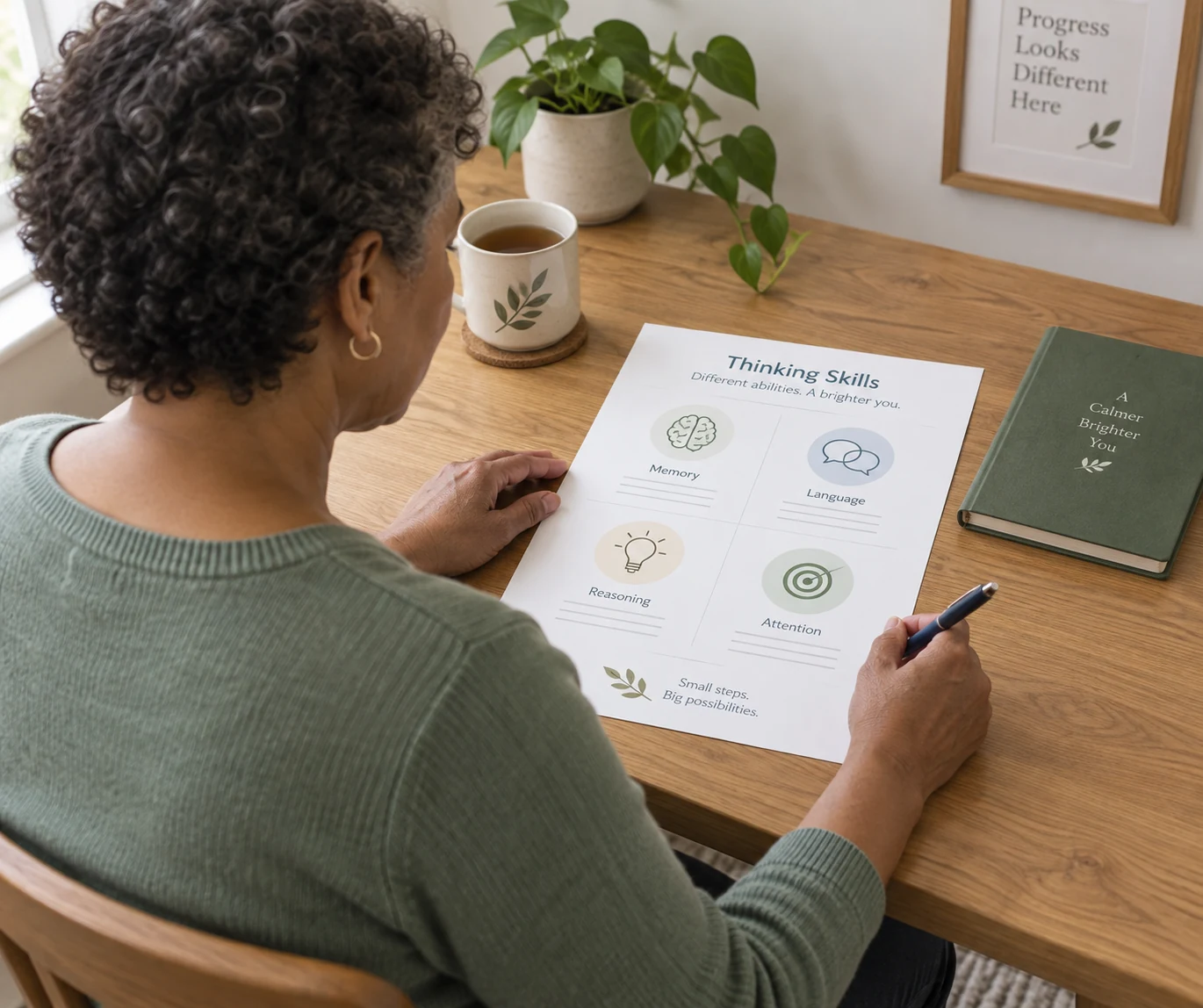
結果を読みすぎずに読む方法
A low score, confusing pattern, or hard task does not automatically explain
the cause. Fatigue, anxiety,
pain, medication, sensory issues, unfamiliar technology, language, sleep,
and stress can affect
performance.
A strong score also does not mean daily-life concerns should be dismissed.
Useful interpretation asks:
- 何が測定されたか
- 何が測定されていないか
- どの条件が成績に影響した可能性があるか
- どの次の一歩が相応しいか
Many adults start with a baseline, track change, adjust habits, or bring
notes to a healthcare
appointment. CognitiveTest.me’s online cognitive assessment presents results
in a structured format.
成人の行動評価と認知評価:実用チェックリスト
Clarify the purpose before relying on results.
- 短い間隔の後に3から5語を思い出す
- 数字を順向きまたは逆向きに繰り返す
- 複数段階の口頭指示に従う
- 物の名前を言う、または類似点を説明する
- 時計を描く、図形を写す、またはパターンを完成する
- 簡単な計算や順序課題を解く
- 日付、場所、現在の状況を答える
A cognitive assessment questionnaire PDF can organize observations and
questions, but it should not
replace thoughtful review of cognitive skills, behavior patterns, health
context, and daily function.
低負荷のオンライン認知ツールが役立つとき
An online tool helps most when used as a structured starting point. It can
reveal patterns, describe
strengths and challenges, and make conversations more concrete.
Online results cannot account for every medical, emotional, cultural,
language, sensory, or environmental
factor.
To begin calmly, explore an educational cognitive testing platform focused on
practical insight rather than alarm.

FAQ
How do I pass a cognitive assessment test?
The goal in health or self-reflection is a representative picture, not
school-style passing. Rest, use
needed aids, read instructions, and answer honestly.
Why would a neurologist order a cognitive test?
A neurologist may use testing for concerns about memory, attention,
language, thinking speed, problem
solving, or daily functioning.
What does it mean when you fail a cognitive test?
A below-expected result means the task was harder under those conditions.
It does not explain the reason
by itself.
What kind of questions are asked on a cognitive assessment test?
Common tasks involve recall, attention, arithmetic, orientation, naming,
instructions, drawing, patterns,
and practical judgment.
Are behavioral and cognitive assessments the same thing?
No. One focuses on mental skills; the other focuses on observable patterns.
Together they are often more
useful.
Is a free cognitive test with answers useful?
It can show question styles, but memorized answers reduce usefulness.
Honest fresh responses are better
for insight.
Can adults use behavioral and cognitive assessment for self-reflection?
Yes, with realistic expectations. Professional guidance is better when
concerns affect independence,
work, safety, or relationships.